
Stroke & Neurovascular Program
Advanced care for the brain’s most complex blood vessel conditions
When blood flow to the brain is blocked or a blood vessel is damaged, every second matters. At the Overlake Neuroscience Institute, our stroke and neurovascular specialists provide advanced diagnosis and treatment for conditions affecting the blood vessels in and around the brain.
From emergency stroke care to highly specialized procedures for aneurysms and other complex vascular conditions, our multidisciplinary team combines advanced technology, specialized expertise and coordinated care to help protect brain function and give patients the best opportunity for recovery.
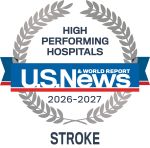
Recognized for high-performing stroke care
Overlake Medical Center has been recognized by U.S. News & World Report as a 2026-2027 High Performing hospital for stroke, reflecting a demonstrated commitment to quality care and outcomes.
Advanced imaging for faster, more precise stroke care
When a stroke occurs, rapid diagnosis and treatment can make a critical difference. Our specialists use advanced imaging technology to quickly identify what is happening in the brain and its blood vessels and determine the most appropriate treatment.
Our biplane imaging technology provides highly detailed, real-time views of the brain’s blood vessels from two angles simultaneously. This advanced imaging can help our specialists precisely locate blockages, aneurysms and other vascular abnormalities and guide minimally invasive procedures with greater accuracy.
For patients experiencing certain types of stroke, this technology can play an important role in rapidly identifying and treating the source of the problem.
Comprehensive stroke and neurovascular care
Our specialists diagnose and treat a broad range of conditions affecting the blood vessels of the brain and those that supply it, including:
- Stroke and TIAs (transient ischemic attacks, sometimes called “mini-strokes”)
- Brain aneurysms
- Arteriovenous malformations (AVMs)
- Carotid artery disease, also called carotid stenosis
- Moyamoya disease
- Other complex neurovascular conditions
When every minute matters
A stroke can cause permanent brain injury when blood flow is interrupted. The sooner a stroke is identified and blood flow is restored, when possible, the greater the opportunity to limit damage.
Our stroke team works quickly to determine the type and location of a stroke and begin treatment. Care may include:
Clot-busting medication
For eligible patients, medication may be used to dissolve a blood clot and restore blood flow to the brain as quickly as possible.
Minimally invasive neurovascular procedures
Using a catheter inserted through a small incision, specialists can navigate directly to the affected blood vessel to remove a clot, repair an aneurysm or treat other vascular conditions.
Biplane image-guided procedures
Our advanced biplane imaging system provides simultaneous views from two angles, helping specialists navigate delicate blood vessels and perform complex procedures with precision.
Radiosurgery
For certain vascular conditions, specialized radiation can be used to treat abnormal blood vessels without an incision. Learn more about radiosurgery
Surgical treatment
When surgery is needed, our specialists use techniques designed to address the condition effectively while minimizing disruption to surrounding healthy tissue whenever possible.
Rehabilitation and recovery
Stroke recovery doesn't end when emergency treatment is complete. Rehabilitation services can help patients regain strength, movement, communication and independence. Learn more about rehabilitation care
Expert care, from emergency treatment through recovery
Stroke and neurovascular conditions can be complex, but you don't have to navigate them alone. At Overlake, specialists across neuroscience and other disciplines work together to provide coordinated care—from rapid diagnosis and advanced intervention to rehabilitation and follow-up.
If you or a loved one has experienced a stroke or has been diagnosed with a neurovascular condition, our team is here to help.
Call 425-635-6560 to learn more about stroke and neurovascular care at Overlake.