
Measles in Washington: What Families Should Know
Measles cases are rising across Washington state. As of May 22, 2026, 45 cases have been confirmed, and 93% involve people who were not vaccinated. Although measles was declared eliminated in the United States in 2000, outbreaks can still occur — especially in communities with lower vaccination rates or increased international travel. Here’s what parents should know to help protect their children and their communities.
What Is Measles — and Why Is It So Serious?
Measles is a highly contagious respiratory virus that spreads easily through coughing and sneezing. According to the Centers for Disease Control and Prevention (CDC), if one person has measles, up to nine out of 10 of their close contacts will become infected if they’re not protected. It can even stay in the air up to two hours after an infected person is in the area.
The Best Defense: Vaccination
The measles, mumps and rubella (MMR) vaccine is one of the most effective ways to prevent measles. Two doses provide about 97% protection, and that protection typically lasts a lifetime. However, vaccination rates in Washington state remain lower than needed to fully protect communities.
What Are the Symptoms of Measles in a Child?
If your child shows symptoms, contact your health care provider right away.
Symptoms to watch for:
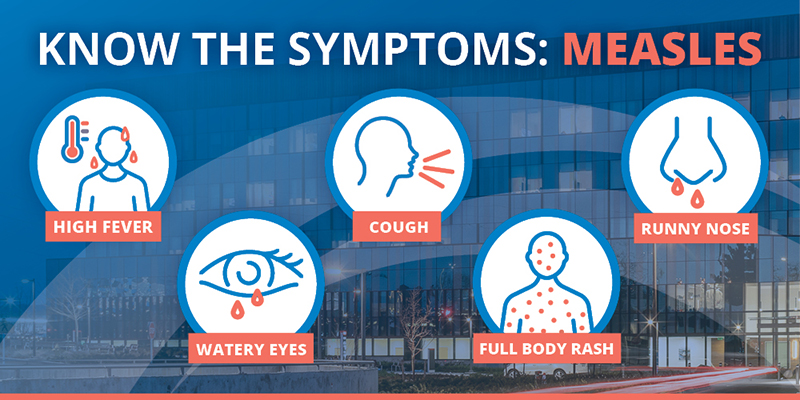
The early phase of the illness lasts between one and four days. Symptoms are like those of an upper respiratory infection. The most common symptoms include:
- High fever.
- Red, watery eyes.
- Hacking cough.
- Runny nose.
After two or three days of the above, other symptoms include:
- Deep, red, flat rash that starts on the face and spreads down to the torso, arms, legs and feet.
- Severe diarrhea.
- Small spots with white centers (Koplik spots) on the inside of the cheek.
What About Adults?
Adults who haven’t been vaccinated should get the two-dose MMR vaccine. If you're unsure about your vaccination status, talk to your doctor about a simple blood test to check your immunity. People born before 1957 are generally considered immune due to likely exposure during childhood.
Still on the Fence About Vaccines?
With measles cases back in Washington, staying up to date on vaccines is more important than ever. If you’re hesitant, talk to your health care provider. Years of research have proven the safety and effectiveness of vaccines. Getting vaccinated protects not only you and your family, but also the vulnerable people around you — like babies too young to be vaccinated and those with compromised immune systems.

Kelli Forde is a senior communications specialist with over a decade of experience in healthcare marketing and communications. She works with Overlake staff, providers and patients to share meaningful stories, expert advice and valuable tips for leading a healthy lifestyle.